Luxury is what cannot be accelerated
AI makes almost everything fast and cheap. The future of luxury is what cannot be hurried: a watch movement built twice, an iris root that takes six years.

The first Apple Watch could be had in a case of 18-carat gold, for up to $17,000. That was in 2015. Three years later the company’s own software update, watchOS 5, would not run on it, and in 2023 Apple added the watch to its list of obsolete products. Patek Philippe undertakes to maintain and restore every watch it has made since 1839.
The distance between those two promises is the future of luxury. Gold did nothing for the Apple Watch, because material was never what made a thing last. For a long time luxury was defined by price and by the scarcity of what it was made from. Now that AI makes almost everything fast and cheap, another scarcity takes over: time that refuses to be compressed. Luxury is what cannot be accelerated.
Where scarcity went
Scarce material is already a weak foundation. De Beers launched Lightbox in 2018 to sell laboratory-grown diamonds and announced in May 2025 that it would close the business. By then, the company said, wholesale prices for lab-grown stones in jewellery had fallen by 90%. A diamond can now be a manufactured good, priced like one.
AI does to competence what the laboratory did to carbon. I founded a lab in Zürich that works on language models, so I say this without nostalgia: the price of a decent draft or a passable design is heading towards zero. Nobody pays a premium for what a machine produces in a second.
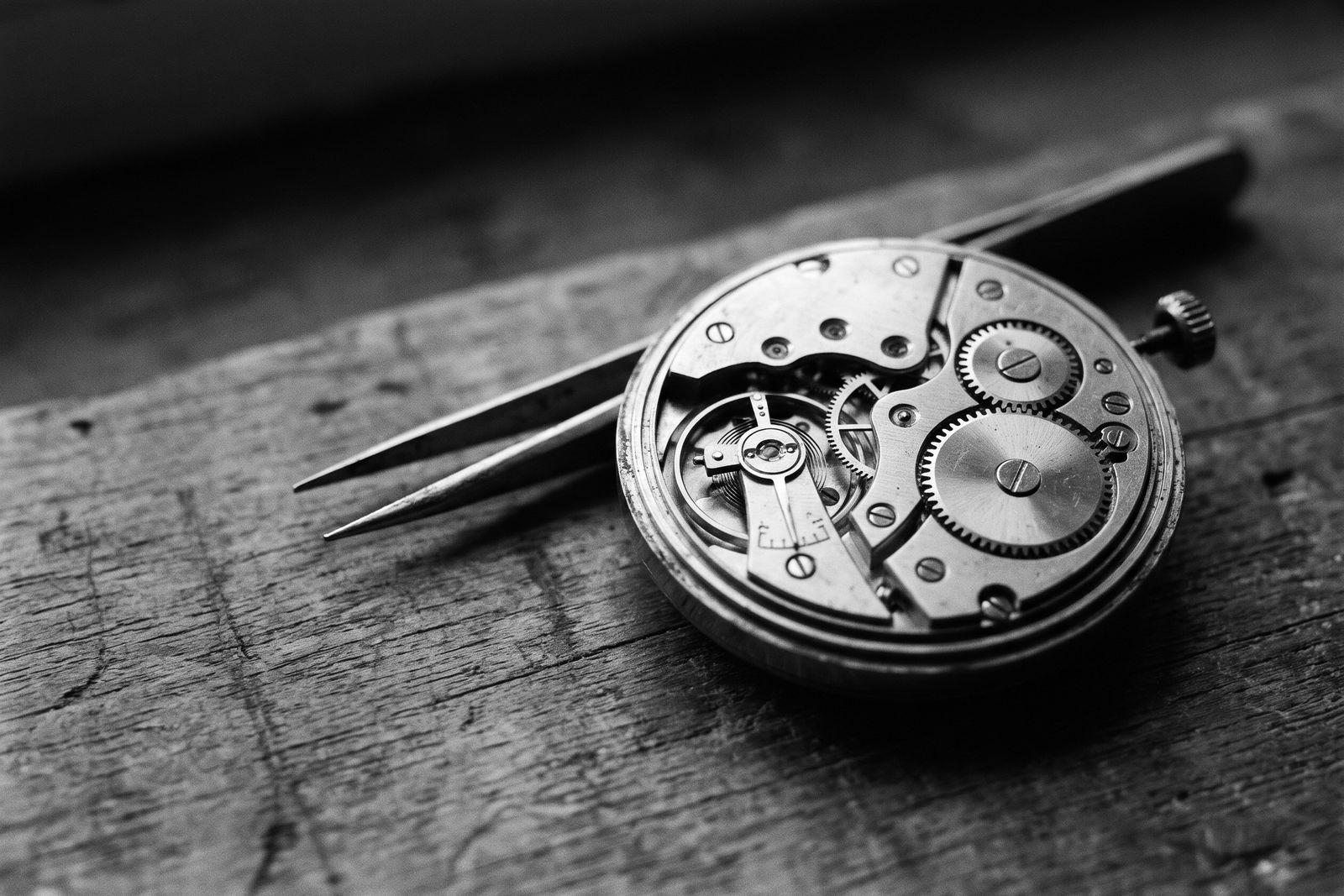
What keeps its price is anything with a clock inside it that nobody can wind faster. The iris of fine perfumery spends three years in the ground, and its root then dries for about three more before a perfumer can use it. At A. Lange & Söhne in Glashütte every movement is assembled twice: built and adjusted, taken apart, cleaned and finished, then built again. No quarterly target shortens either process.
I have a stake in this view. I co-founded Collectif Noir, an independent watch house in Geneva whose small series of mechanical watches run on its own movement, and I am a seed investor in Thomas De Monaco Parfums, an independent perfume house in Zürich. With one foot in a model lab and the other in a watch house, I see two industries misread luxury and AI from opposite sides.
Two industries, both wrong
The luxury industry believes it must speed up to look modern. It has borrowed the drop from streetwear and the gadget from Silicon Valley. In August 2022 Tiffany sold 250 digital passes called NFTiffs, each redeemable for a pendant, to owners of CryptoPunk images. They cost 30 ether apiece, about $50,000 at the time, and sold out in roughly 20 minutes.
Selling out in 20 minutes is an achievement for a ticket agency. A house whose value lies in patience teaches its customers to expect speed, and speed is the one contest it will lose to anyone with a server. The other reflex is the price tag. Bain’s 2024 luxury study counted about 50 million customers lost in two years and pointed to brands’ continued price rises. A higher price with no more time in the product is a tax on loyalty, and those customers declined to pay it.
The technology industry makes the opposite mistake. It thinks luxury is a logo on a premium tier. Hence the gold Apple Watch: a product on an annual release cycle, dressed as an heirloom. Anything that improves every year is out of date every year, which is a virtue in software and fatal in an object meant to outlive its buyer.
The future of luxury
A sceptic will call all of this romance. Luxury, he says, is marketing and status, and has been since Thorstein Veblen described conspicuous consumption in 1899. A mechanical watch keeps worse time than a phone. Its buyer pays to be seen.

I grant the premise and reject the conclusion. The sceptic is right about much of what is sold as luxury: a factory product at a workshop price. But status attaches to whatever is hard to get, and what is hard to get changes.
When machines make material and competence abundant, status moves to the one input that cannot be manufactured or copied. Marketing can claim time, but it cannot fake it for long, because a campaign made in weeks is imitated in weeks. Six years of iris take six years to imitate.
The sales figures agree. For 2024 Bain forecast the first fall in personal luxury goods since the financial crisis, the pandemic aside, and the fashion and leather division of LVMH shrank by 1% on an organic basis. Hermès grew its sales by 15% at constant exchange rates. A Kelly bag there can take 20 hours to make, four of them for the handle. "You cannot compress time, at one point, without compromising on quality," its artistic director, Pierre-Alexis Dumas, told CBS that December.
An iris planted this year will reach a perfume bottle in 2032 at the earliest. No software update will bring that date forward.
The pictures in this essay were made with AI.