Dressing well was a courtesy
People once owned few clothes and looked better in them. Why I think style and class are coming back, in other clothes but on the same principles.
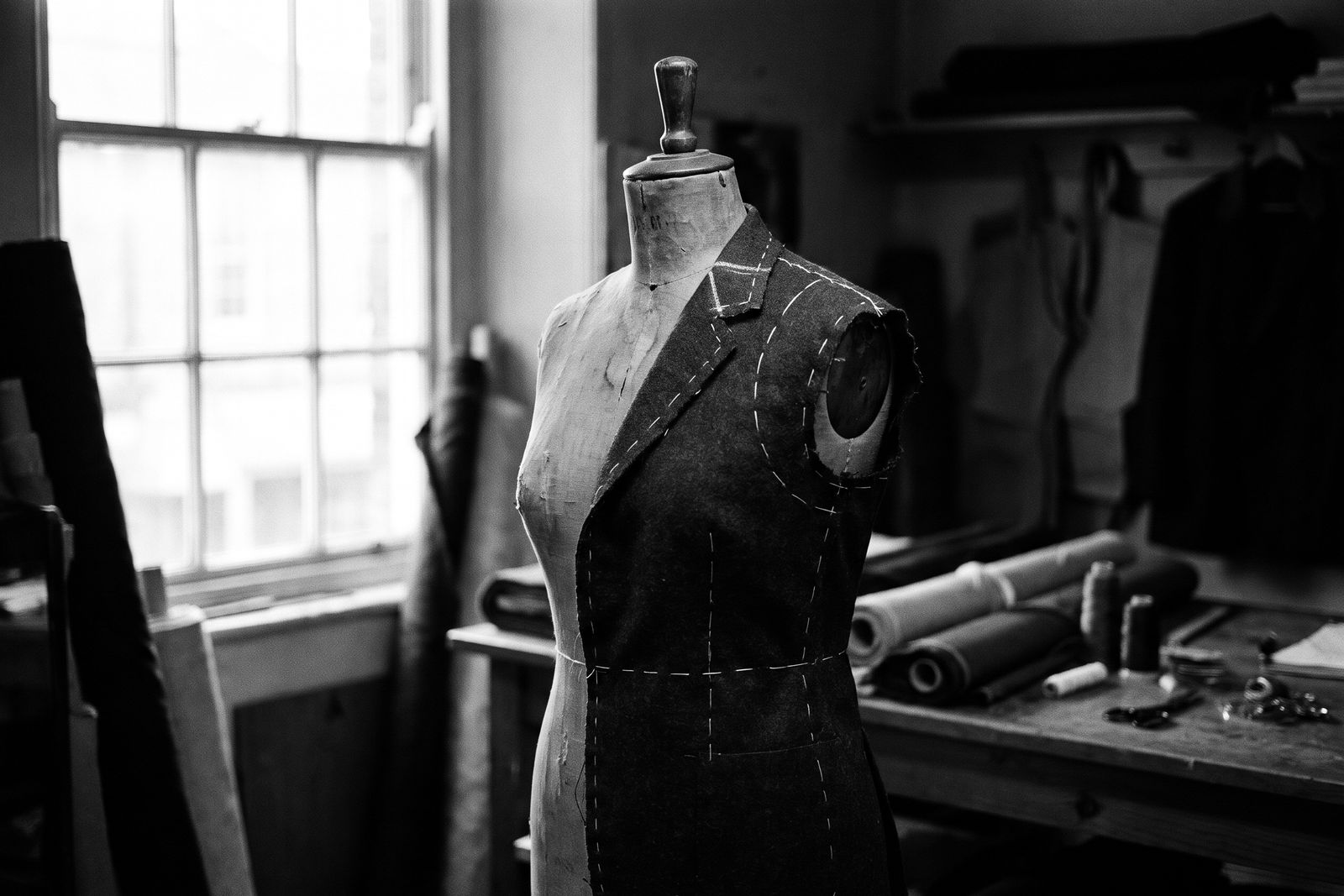
Look at any street photograph from the 1950s. A man waiting for a tram, a woman carrying her shopping, workers at a factory gate. Almost everyone in the picture is better dressed than almost everyone in the same street today. They were not richer. Most of them owned a fraction of the clothes we do.
I should declare an interest. My sister is a fashion designer. With a partner she ran the Zürich label RS Hader, which set out to make what it called honest clothes: reduced shapes, exact cuts, prints of its own. Fashion was never a foreign country in our family, and I have opinions.
Why they looked better
The reasons are practical. People had few clothes, so each one had to be good. A coat was bought to last ten winters and was altered when its owner changed shape. Fit came from a tailor or from someone at home with a needle, which is why a cheap suit of 1955 sits better than an expensive one bought online. The cloth was wool, cotton and linen, which hang and age in ways polyester does not.
There was also an idea behind it that we have almost lost. Dressing was a courtesy. You dressed for the people who had to look at you: the client, the teacher, the other guests. It said that the occasion mattered and that you had made an effort for it. By class I mean that quiet effort, and it was never a question of money.
How it ended
The effort went out of fashion in two steps. First the office gave up. In 1992 Levi’s sent a booklet called A Guide to Casual Businesswear to 25,000 personnel managers in America, in order to sell more khaki trousers. It worked better than any campaign should. Within a decade the suit was a costume for weddings and court appearances.
Then clothes became disposable. In the fifteen years to 2015 the world doubled the number of garments it made, by the count of the Ellen MacArthur Foundation, while the number of times each one was worn fell by more than a third. Less than 1% of the material ends up in new clothing. A T-shirt now costs less than a sandwich and is designed to be photographed once.
Freedom was the promise. Wear what you like, be yourself. What we got was another uniform, and an uglier one: the hoodie, the leggings, the trainers the size of bread loaves. When everything is permitted most people choose comfort, and comfort has no shape.
Why it is coming back
I think the tide is turning, and nostalgia has little to do with it.
The first reason is scarcity. When a machine can generate a flawless picture of anyone in anything, the picture stops being worth much. What cannot be generated is a person standing in a room in clothes that fit. How you actually turn up becomes the one signal that is hard to fake, and people will invest in it again.
The second is waste. A generation that grew up sorting its rubbish is working out that the most sustainable garment is the one worn three hundred times. Second-hand shops and alteration tailors are full of people under thirty. They are relearning what their great-grandparents knew: buy less, buy better, have it altered.
The third is boredom. Every fashion reacts to the one before. After thirty years of looking as if we had just left the gym, making an effort is the only rebellion left.
The same principles, other clothes
It will not look like 1955. Nobody is bringing back the hat and the girdle, and nobody should. The form will be new: lighter cloth, softer construction, shoes made to be worn with a jacket and a bicycle. The principles underneath do not change, because they come from the body and from other people. Fit. Proportion. Good material. A sense of occasion. Restraint.
A designer notices that these are the principles of any good object: a chair that fits, in honest material, made for its purpose, without decoration it does not need. For a while we accepted that clothes were exempt. I do not think they are, and I look forward to streets that are worth photographing again.
The pictures in this essay were made with AI.