Beauty is a form of trust
People trust what is well made. Nuclear power and AI answer fear with statistics. What reassures is design that shows honestly what the machine is doing.
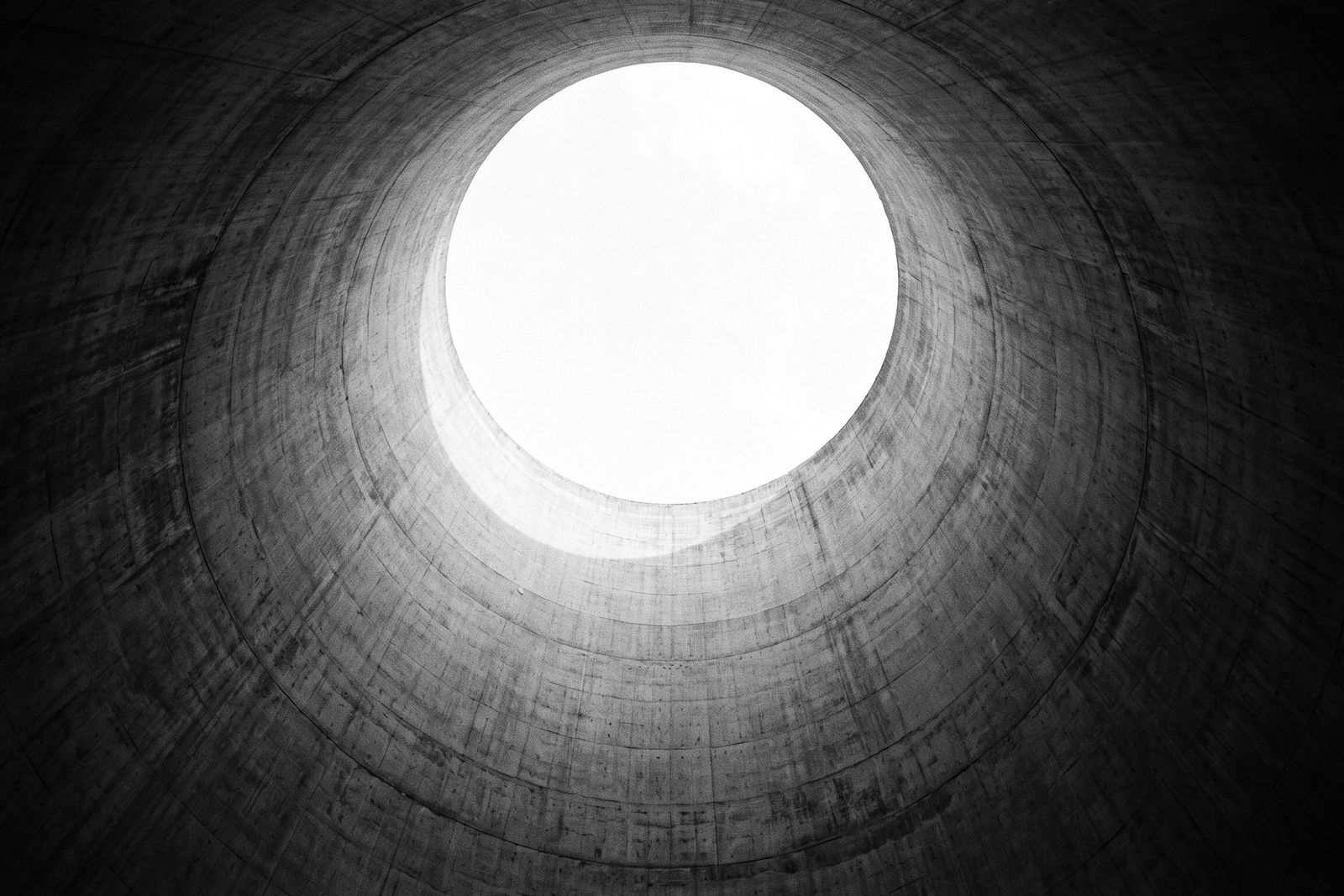
On the control panel at Three Mile Island a light told the operators that a relief valve had closed. The valve was stuck open. All the light reported was that the power which opens the valve had been switched off. It was about four o’clock on the morning of 28 March 1979, and coolant went on escaping for more than two hours. Within minutes a hundred alarms were sounding around a crew trying to understand its own machine.
The radiation that got out did negligible harm to anyone’s health, by the regulator’s own account, but the harm to the name of nuclear power has lasted to this day. I count that light as a failure of design before a failure of engineering: a control that says something other than what the machine is doing is a lie built in at the factory. It also shows how design and trust are joined. People trust what is well made, because the care they can see is the only evidence they get of the care they cannot. Beauty is that evidence.
What the eye audits
Almost nobody can inspect a pressure vessel or a neural network. Anybody can inspect a weld seam, or hear whether a door closes with one sound or with three. From such things people infer the rest, and the inference is sounder than it looks. A firm that sweats over the part you see rarely skimps on the part you do not, because both come from the same habit.
In 1995 Masaaki Kurosu and Kaori Kashimura, two researchers at Hitachi’s Design Center in Tokyo, showed 26 layouts of a cash machine to 252 people. How easy a layout looked to use depended more on how beautiful it was than on how easy it really was. The trade calls this the aesthetic-usability effect and files it under bias. I call it the way people have always judged things they cannot open.
My own trade taught me the same from the other side. I designed machines for Nespresso and devices for Sony and Panasonic, where the buyer reads a seam slightly out of line as a verdict on the whole company. At Electrosuisse I built a department on one premise: the instructions belong to the safety of a machine, and its certificate should cover them. An instruction nobody can follow is a defect, like a frayed cable.

Why design matters most
Nuclear power and artificial intelligence need public trust more than any other technology, and both present themselves badly. The face of nuclear power is the cooling tower. It emits water vapour and nothing else, and coal plants have them too, yet it became the icon of dread. The face of AI is the chat window: an empty box with a cursor, which gives no sign of what the machine knows and what it merely guesses.
The makers of both answer fear with numbers. Our World in Data puts coal at about 25 deaths for every terawatt-hour of electricity it produces and nuclear at 99.8% fewer, Chernobyl and Fukushima included. The figure is true and has calmed few of the frightened, and the benchmark scores that AI labs publish do no better. A statistic asks you to trust whoever did the counting, which is the very thing in doubt.
Britain understood this nearly a century ago. When Londoners objected to a coal power station going up at Battersea, its builders commissioned the architect Sir Giles Gilbert Scott in 1929, with construction already under way, to refashion the exterior. He wrapped it in fine brickwork and shaped the chimneys as fluted columns. The state now protects a coal plant as a listed building.
One of the boards I serve on is Deep Atomic’s. The company is developing the MK60, a compact reactor built to give an AI data centre 60 MW of electric power and 60 MW of cooling. A machine like that will stand close to where people work, and they will judge it by its gate and its control room long before they read a page of its safety case. The Piëch Mark Zero, whose design I shaped, made the same argument at lower stakes. A new carmaker has no record, so the surfaces of its first car must do the work that decades of reputation do for the old names.
The beautiful lie
Beauty also deceives, and Theranos is the standing example. The studio of the Swiss-born industrial designer Yves Béhar designed the casing of its Edison blood-testing machine. Béhar later told Fast Company that his part had been the look of the thing, and that he had seen the cables and tubes inside with no means of telling whether they worked. They did not. Elizabeth Holmes, the founder, was convicted of fraud in January 2022, and the handsome box turned out to be wrapped around an empty promise.
The objection proves the premise. Nobody forges a worthless currency, and swindlers borrow beauty because beauty is what people trust. The Theranos casing was styling, a shell drawn around a mechanism its designer could not vouch for. Design worth the name starts inside, with what the machine does, and makes the surface report it truthfully. By that standard the box in California was ugly, and so was the control panel in Pennsylvania.
The cure for beautiful lies is to let designers into the engine room and hold them to what they find there. After Three Mile Island the American regulator required plants to give their operators, in the control room, a direct indication of whether the relief valves were open or shut. It took a partial meltdown to buy one honest light.
The pictures in this essay were made with AI.